
fibona Lab
A Community of Co‑Creation Between
Shiseido Researchers and Consumers:
The Challenge and Future of “Club fibona”
2026.03.18
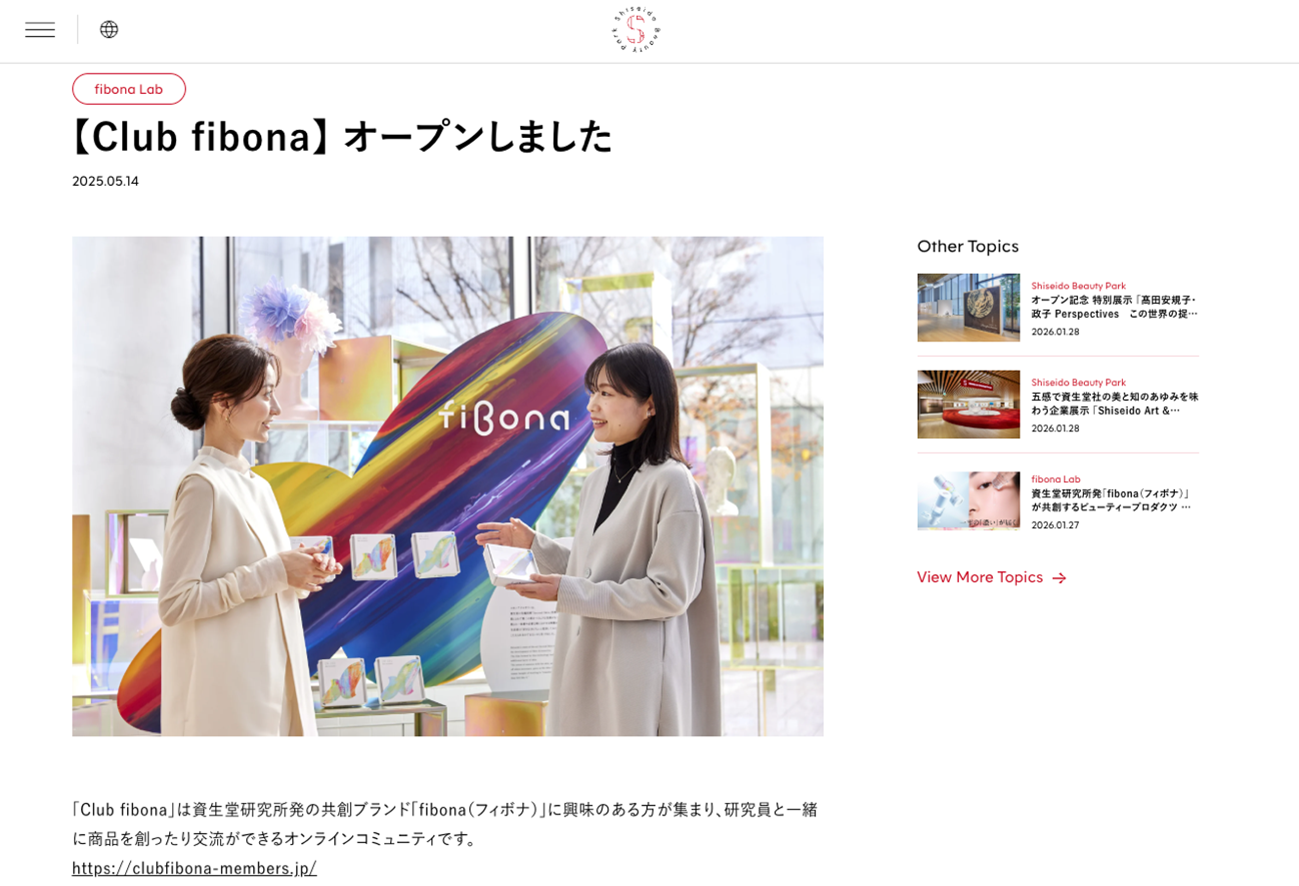
Shiseido’s open innovation program, “fibona.” One of the initiatives that embodies its brand concept—“unprecedented, co-creative, and unfinished”—is the online community “Club fibona,” launched in May 2025.
Established as a community where participants explore “new possibilities of beauty” together with Shiseido researchers, what kind of co-creative space has Club fibona grown into today?
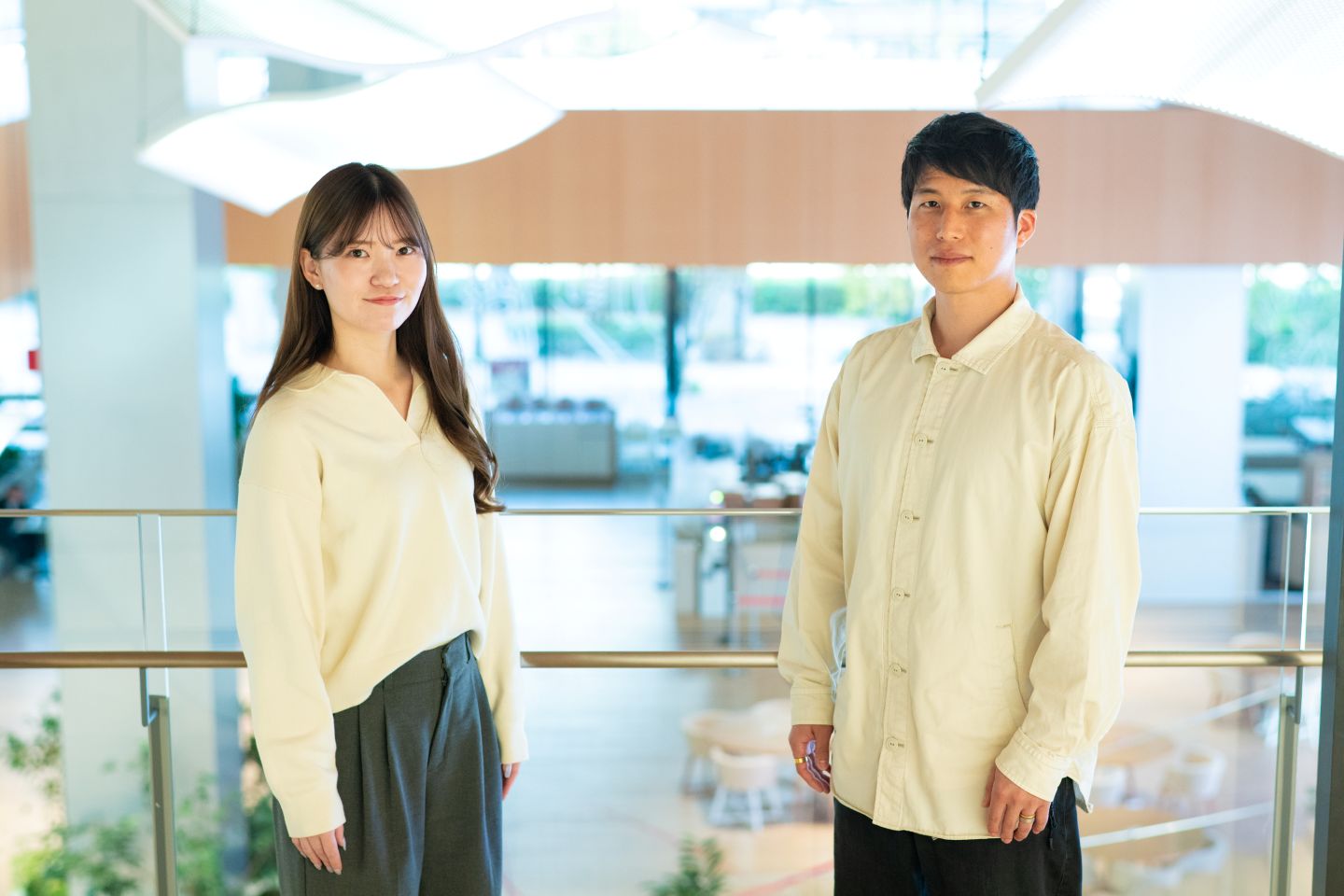
We spoke with Hiroki Kobori, a fibona member who has led the initiative since its launch, and Izumi Esaki, Manager of the Community Marketing Section at Commune Inc., who supports the community’s design as an external partner. They shared insights into the journey so far and the vision for the community they aspire to build.
A Community Accelerating the Social Implementation of Research Outcomes.
—Could you tell us about the background behind the launch of the online community “Club fibona”?
Kobori:
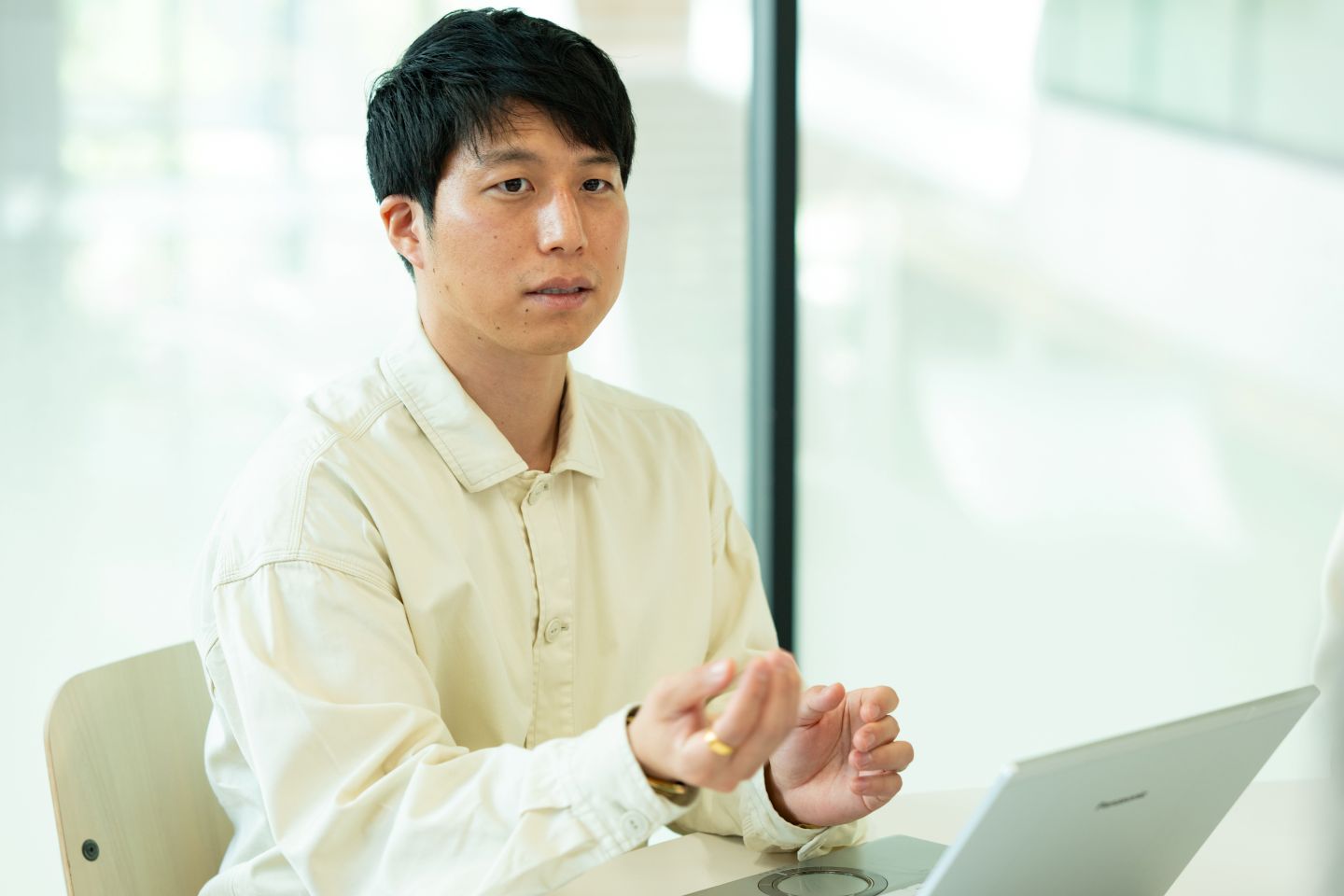
fibona is built around three core themes—“unprecedented, co-creative, and unfinished”—and continues to take on challenges without precedent. In January 2025, Shiseido Beauty Park (SBP) reopened following its renewal, marking a new phase focused on how to implement research outcomes in society. At that time, we believed that a “community” would be one of the most effective ways to further accelerate co-creation.
By integrating SBP as a physical space with Club fibona as a digital platform, we aim to connect directly with consumers and bring co-creation to life more deeply and with greater speed. With this vision in mind, we launched and began operating the online community, Club fibona, in May 2025.
—What does Club fibona value most?
Kobori:
We see the members of Club fibona as partners who create value together with us. In other words, this is not a conventional mass‑marketing relationship in which a company unilaterally communicates information and customers simply purchase products.
At Club fibona, we place great importance on building a flat and equal relationship with consumers—one founded on mutual collaboration rather than one-way communication.
—How is Commune Inc., the external partner of Club fibona, involved?
Esaki:
At Commune, we provide the community success platform “Commune” and offer a range of support services related to building communities and fostering communication that nurtures trust between brands and their customers.
For Club fibona, in addition to providing the online community platform, we have been working alongside the team from the very beginning—starting from a zero-based approach to defining the community’s purpose and direction. Currently, we continue to support its management through regular discussions with Mr. Kobori.
Kobori:
When we first began working with Commune, I told them that we did not want Club fibona to become merely a promotional platform. Even if the scale is small, we want to explore what genuine, heartfelt co-creation can look like. That conviction remains very strong within us today.
Esaki:
In a typical “fan community,” members often gather around products that are already widely recognized and popular. However, fibona’s products are developed with the aim of co-creating value together with consumers, which means sales volumes and points of purchase are limited.
Under such unique conditions—where conventional best practices we have cultivated may not necessarily apply—the question becomes how to build a community from the ground up. For us as well, it has been highly challenging, and precisely because of that, we find it both meaningful and exciting.

What Co‑Creation Requires: An Equal Partnership.
—How can people join Club fibona? Are there any requirements for participation?
Kobori:
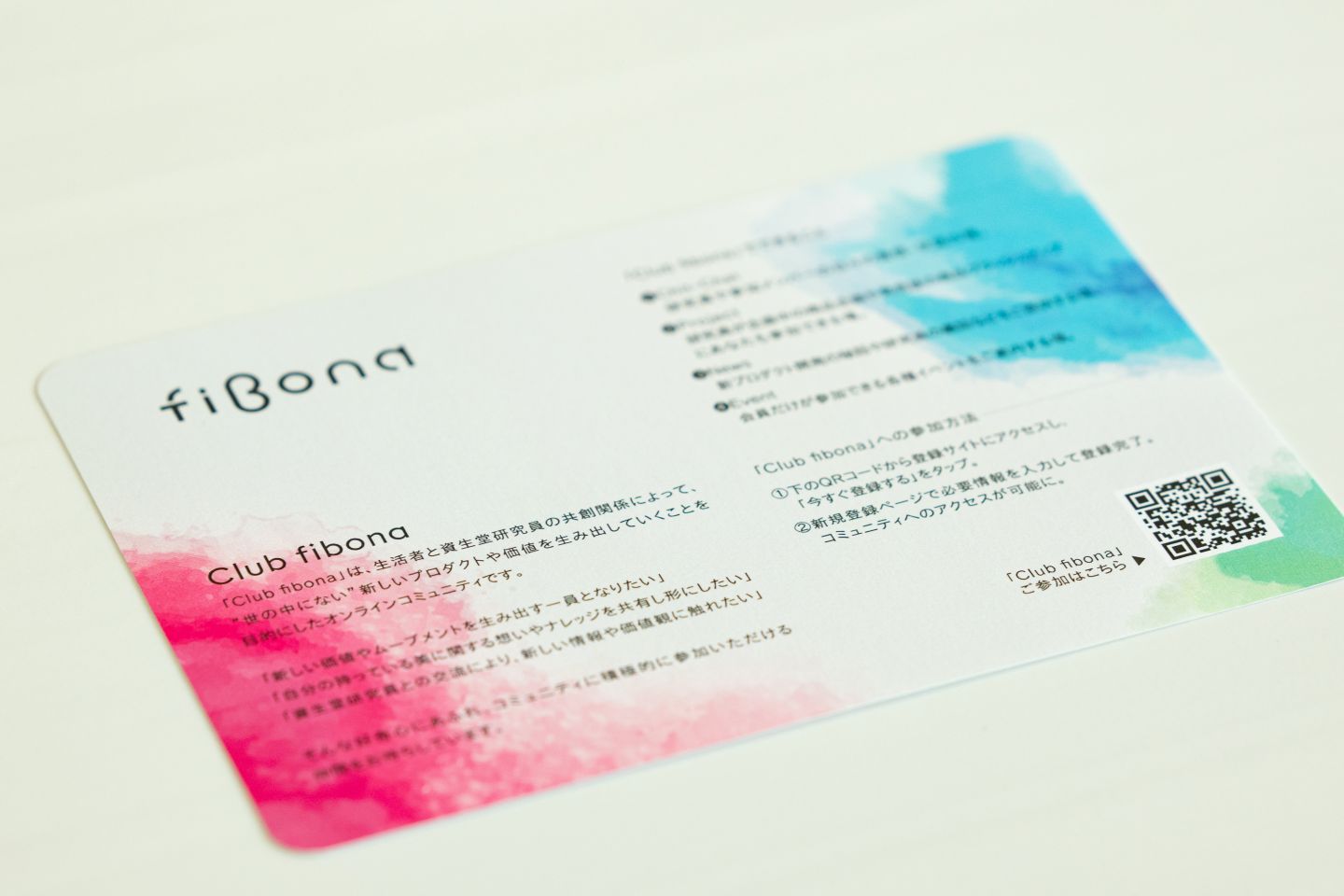
At present, Club fibona is open to anyone who wishes to join. Simply registering through the official Club fibona website allows you to become a member and participate in posts and events.
In fact, when we first launched the community, we considered making it a paid membership program. However, we decided to set up a six-month pre-launch period to carefully evaluate whether it should eventually become paid. At that time, access was limited primarily to product purchasers, and the entry points were more restricted.
—Why did you ultimately choose a free and open model rather than a paid one?
Kobori:
The main reason was that we returned to our original principle: valuing an equal relationship. We were concerned that introducing a structure where one party “provides” a space and the other “pays” for it might unconsciously create a hierarchy.
What we aim to build is a space of co-creation where fibona and consumers stand on equal footing and create new value together. From that perspective, setting a barrier to entry and “selling” access to the space did not fully align with what we truly wanted to achieve.
Esaki:
Avoiding hierarchical dynamics is an extremely important perspective when fostering a healthy community. Thanks to that decision, I feel that Club fibona has cultivated an atmosphere where people with genuine curiosity and empathy for the brand can freely come together.
A Space for Dialogue Created Through Casual Chats, Tea Gatherings, and Events.
—It has been six months since the launch. What specific initiatives have you undertaken so far?
Kobori:
Broadly speaking, our activities are built around three main pillars.
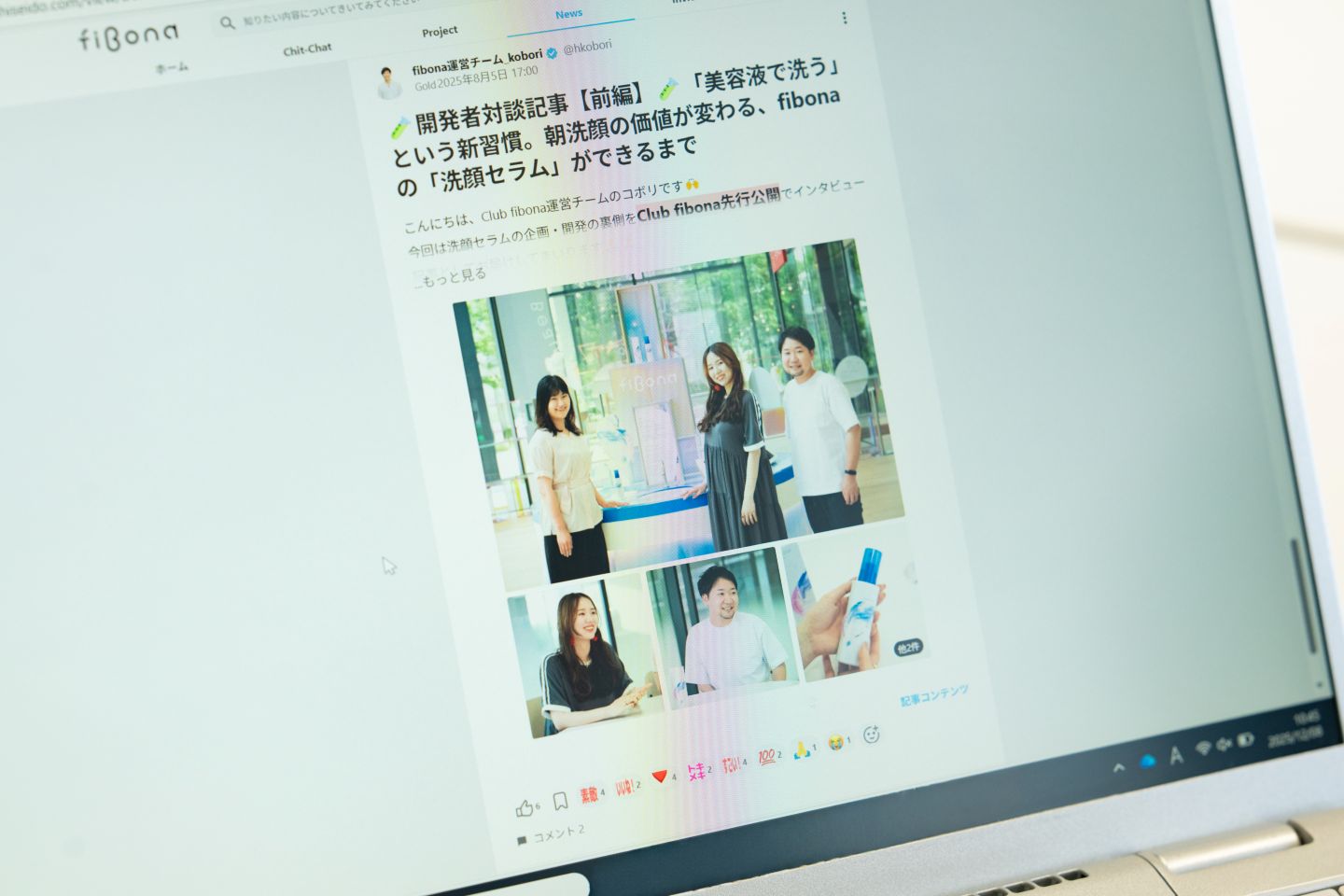
The first is “Chit-Chat,” a casual discussion board where members can freely exchange conversations and information related to beauty.
The second is “Project” (※)—an open-call initiative where we invite feedback on specific products or collaborate with members to create something together.
The third is “Event,” which takes place at SBP (Shiseido Beauty Park).
(※ As of the end of March 2026, “Project” has been renamed “Activity.”)

—What kinds of conversations take place on the “Chit-Chat” discussion board?
Kobori:
Of course, members share stories such as “I tried this fibona or Shiseido product,” but the conversations go far beyond that. There are discussions about products from other companies, inner beauty, yoga, daily routines, and many other perspectives on beauty.
Shiseido positions itself not simply as a cosmetics company, but as a “beauty company,” so we welcome posts that approach beauty from all aspects of everyday life. Recently, we’ve also seen a gradual increase in spontaneous posts from Club fibona members, such as “I visited the SBP café!”
Esaki:
From the management side, we also post easy-to-join topics like, “What do you pay attention to for your beauty routine?” to encourage back-and-forth communication. As community managers, we make it a point to respond to every single post. It may be a steady, behind-the-scenes effort, but maintaining this state of two-way interaction is the most important element for a healthy community.
—What kind of initiatives are included in “Project”?
Kobori:
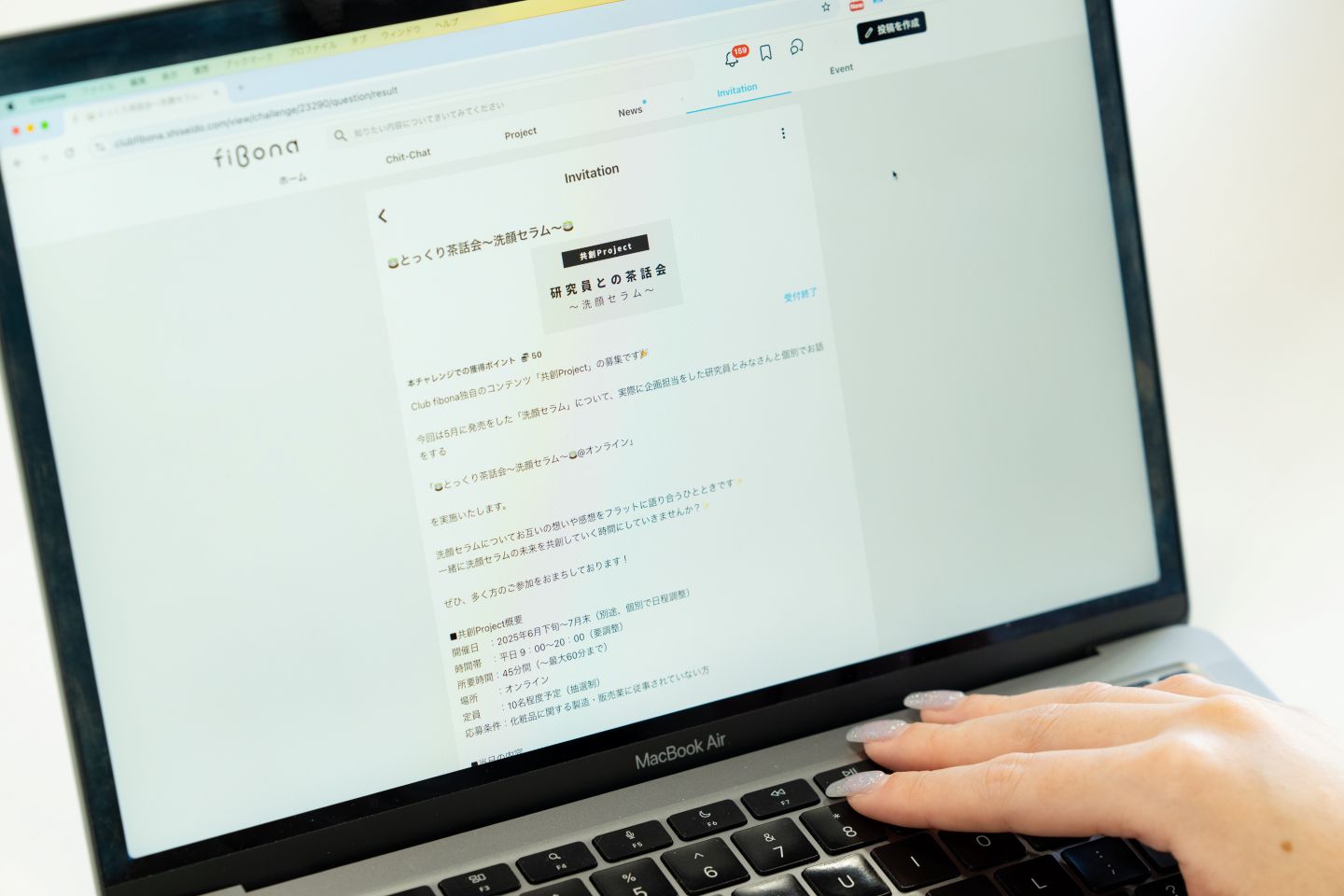
One example is what we call a “Tea Gathering.” It is similar to an online interview about a product, but the idea is to create a space where we can sit down and talk as if we were sharing tea face to face. In these sessions, the researchers in charge of product planning engage in open, equal dialogue with Club fibona members.
—What kind of feedback have you received from participants and researchers?
Kobori:
From Club fibona members, we’ve heard comments such as, “It’s such a rare and wonderful opportunity to speak directly with a researcher,” and “Learning about the behind-the-scenes development process has made me feel even more attached to the product.”
On the researchers’ side, they typically have few opportunities to interact directly with end users, so being able to hear firsthand feedback about the products they worked on has been a very positive source of daily motivation.
Because we value heartfelt dialogue rather than marketing-style “research,” time flies by in every session (laughs).
—I understand that the “Events” held at SBP involve even more in-depth initiatives.
Esaki:
So far, we have held a total of four events—one online and three offline. The most recent was an in-person event focused on a new product prior to its official launch. Members who came to SBP had the opportunity to try near-final prototypes.
The event was conducted in a workshop format, where researchers and participants formed small groups to engage in discussion, and each group later presented the ideas and feedback that emerged.
Kobori:
It was our first time organizing an event centered on a pre-launch product. For the researchers, it provided significant insights into how the product should ultimately be refined and finalized.
Esaki:
Participants also shared encouraging feedback such as, “It was exciting to experience a product before it is available to the public,” and “I feel closer to Shiseido now, and my trust in the brand has grown.”

Kobori:
We have also held events focused on products after they were released. At those sessions, researchers spoke about the background and story behind the products, and participants were invited to experience the changes before and after using them.
We believe that the first step toward co-creation is helping people feel that they are truly participating. For that reason, we find it effective to hold events on a regular basis.
Esaki:
While in-person events have their own unique strengths, some members are unable to attend due to scheduling conflicts or because they live far away. To ensure that they can still get a sense of what took place, we always post an event report on Club fibona after each session.
Kobori:
From the planning stage before the event to the report afterward, Commune has provided tremendous support throughout this entire process.
As Shiseido’s First Online Co‑Creation Community.
—What has been the most challenging aspect of operating Club fibona?
Kobori:
The biggest challenge has been that, in Shiseido’s more than 150-year history, this is the first time we have ever attempted to build a co-creation community.
Of course, there have long been many mechanisms for connecting with customers. However, this is our first initiative to engage in deep, two-way dialogue online and to create value together through a true co-creation community.
With no precedent to follow and no existing path to guide us, the question was how to bring this vision to life. That process of feeling our way forward has been the greatest challenge of all.

Esaki:
For us as well, Club fibona has been a project where conventional rules for community building simply do not apply, and defining what it should be has itself been a major challenge.As we involve more and more people, the question is how to create a space that truly feels like fibona—authentic and comfortable. We are still exploring that every day. However, because we have been able to build a flat and positive relationship with Kobori and the team, we are able to approach even questions without clear answers in a constructive way.Moving forward, we hope to continue working together to make Club fibona even more vibrant and engaging.
Aiming to Build a Community of “Shared Ownership”
—Looking ahead, could you share your vision and aspirations for co-creation through Club fibona?
Kobori:
In operating Club fibona, we have set “shared ownership” as our guiding goal. We believe that the Club fibona community does not belong solely to Shiseido, but to everyone who chooses to participate.
At the moment, much of the communication is initiated by the management team. However, in the future, we hope to create a space where, even without us leading the way, Club fibona members will take the initiative—saying, “Let’s try this,” or “Why don’t we do it this way?”—and new projects will begin organically.
Esaki:
Now that more than six months have passed since the launch, we are starting to see horizontal connections forming among Club fibona members. It was truly heartwarming to see participants gather at the café for their own informal meetup after one of our events.
We hope to create even more opportunities that spark and expand these member-to-member connections.

—Finally, do you have a message for those reading this article?
Esaki:
When people hear the term “co-creation,” it may sound a bit intimidating. But we hope you’ll join with a light and curious mindset—simply thinking, “Let me take a peek at the passion behind the researchers’ work.”
You don’t need to be an expert in beauty to participate. Even just encountering the in-depth information that isn’t shared on other social media platforms, or experiencing the researchers’ enthusiasm firsthand, will surely lead to new discoveries.
Kobori:
Club fibona is still a growing community. Moving forward, we hope to welcome people with an even wider range of perspectives and expand an ecosystem where value circulates mutually among all participants.
We would love to shape the process of creating “something the world has never seen” together with you. We warmly invite you to knock on the door of Club fibona and join us.
Club fibona
https://clubfibona-members.jp/
(text: Ikumi Tsubone photo: Yuko Kawashima edit: Kaori Sasagawa)