
fibona Lab
“Hosting an AR Experience Event for Skin Accessory™:
Creating a New Space with fibona Lab, Co-created with TOPPAN”
2026.01.22
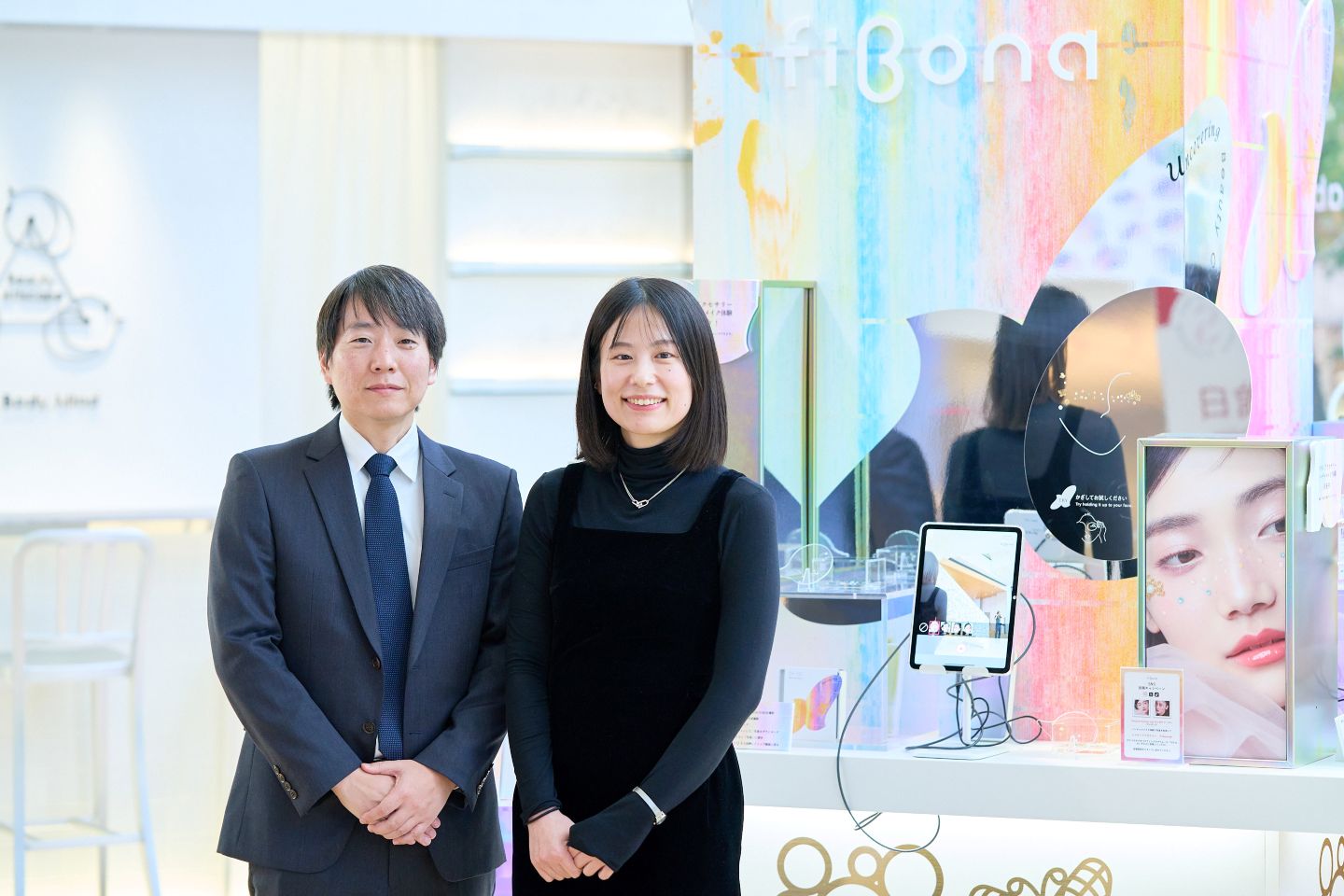
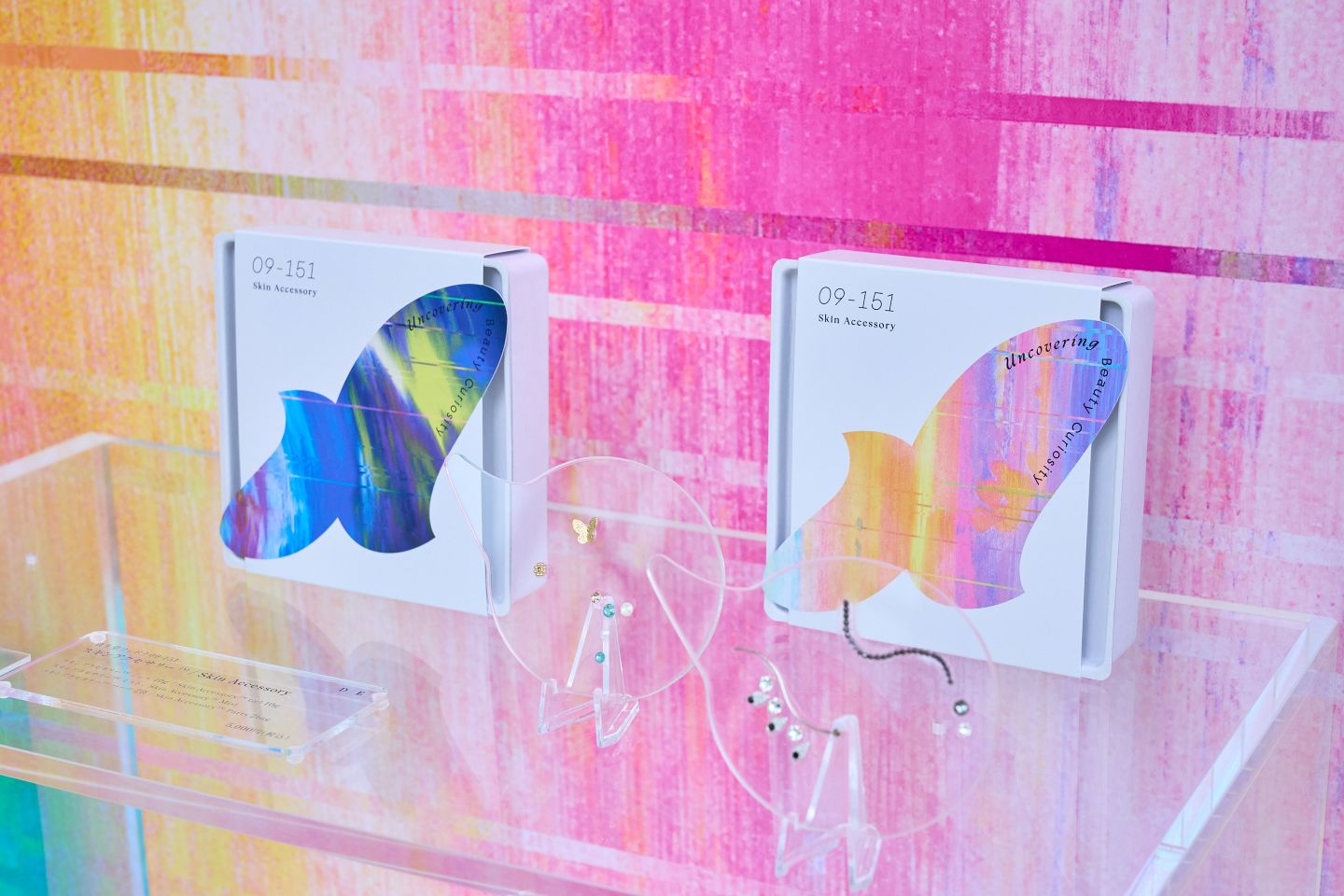
As a beauty product that co-creates unprecedented value under fibona, the open innovation program of Shiseido Research Institute, two new designs of Skin Accessory™ were launched in November 2025.
Skin Accessory™ applies Second Skin technology, which forms an artificial skin layer on the surface of the skin, enabling new forms of self-expression. In mid-December 2025, a limited-time virtual makeup experience event utilizing AR technology was held at fibona Lab on the first floor of Shiseido Beauty Park.
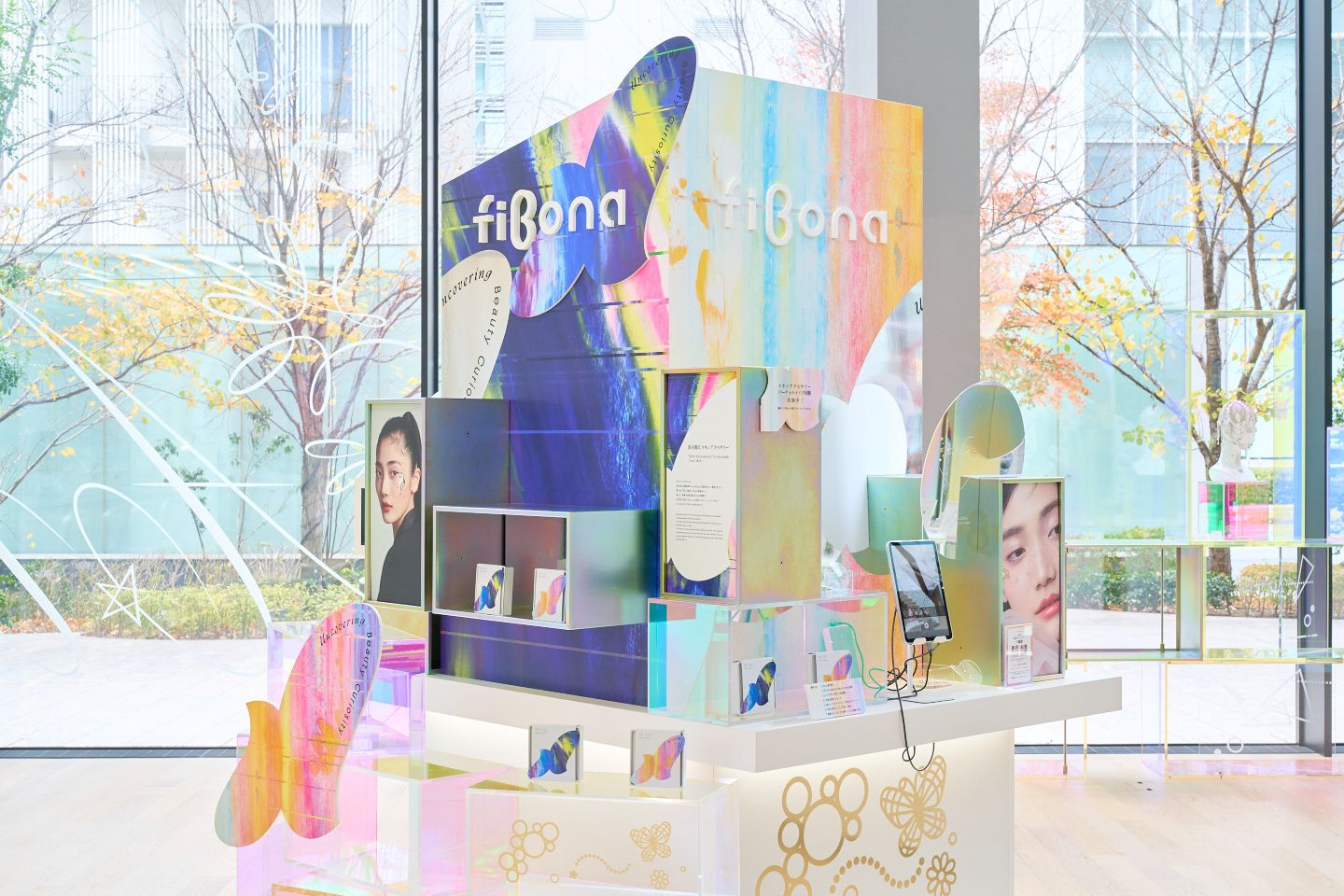
The fibona Lab booth is more than just a place to sell products. It aims to deliver a new kind of beauty experience by sharing moments of “surprise” and “realization” with visitors.
We spoke with three people involved in the project—Shunichi Tetsuya of TOPPAN Inc., the co-creation partner for the AR experience event, along with Akane Yanagihara and Yoko Aizu from the fibona team—about the behind-the-scenes story of the event and the possibilities of co-creation enabled by technology.
“An AR Experience Event Integrating Real and Digital Environments”
──First, could you briefly introduce yourselves and tell us how you came to co-create the AR experience event?
Tetsuya:
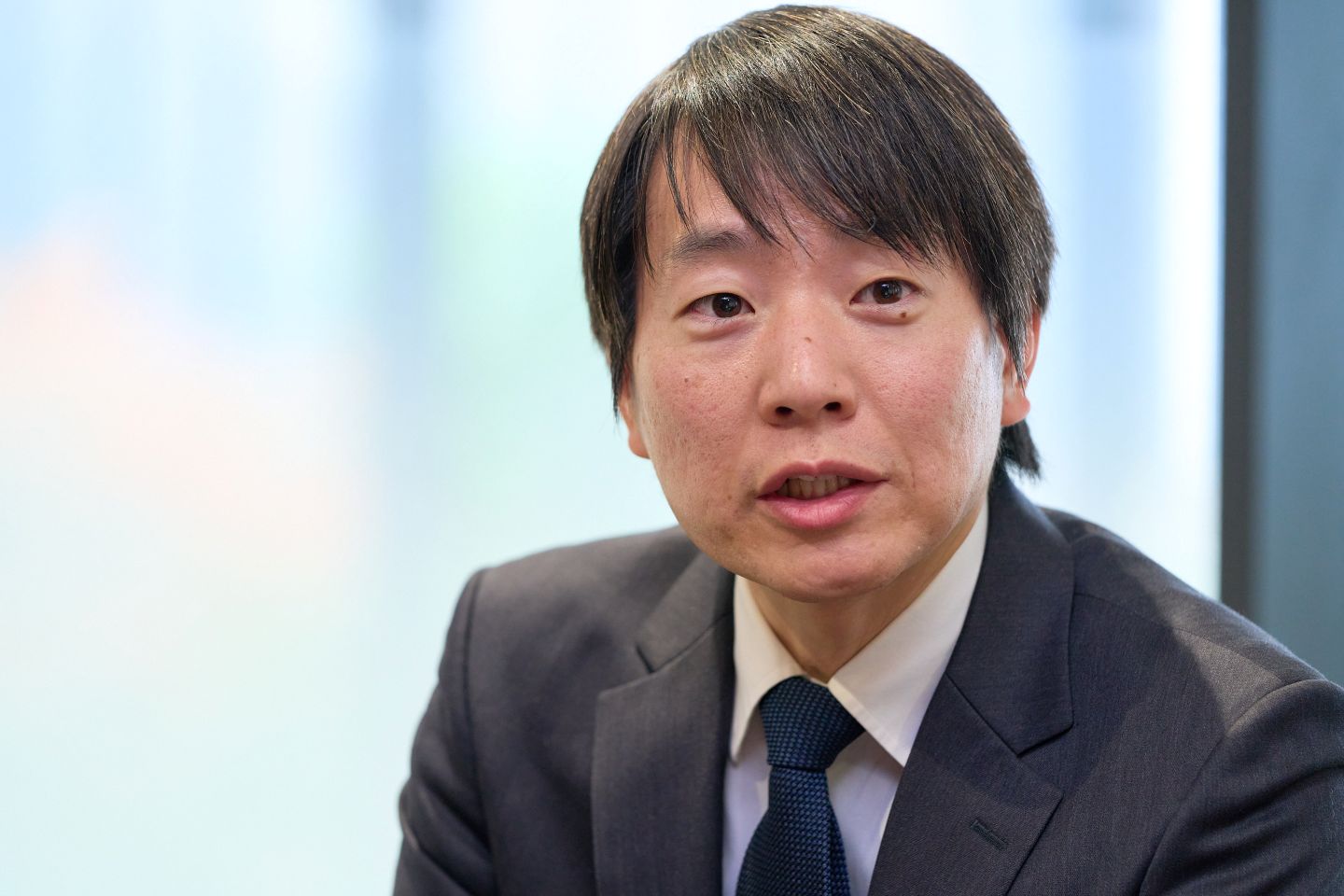
TOPPAN is a company that has long supported corporate activities by designing how information is delivered, based on the printing technologies it has cultivated over many years. Currently, I am working to create new in-store experiences by integrating digital technologies into cosmetics retail spaces, developing new purchasing experiences through technology and touchpoints that foster deeper connections with customers.
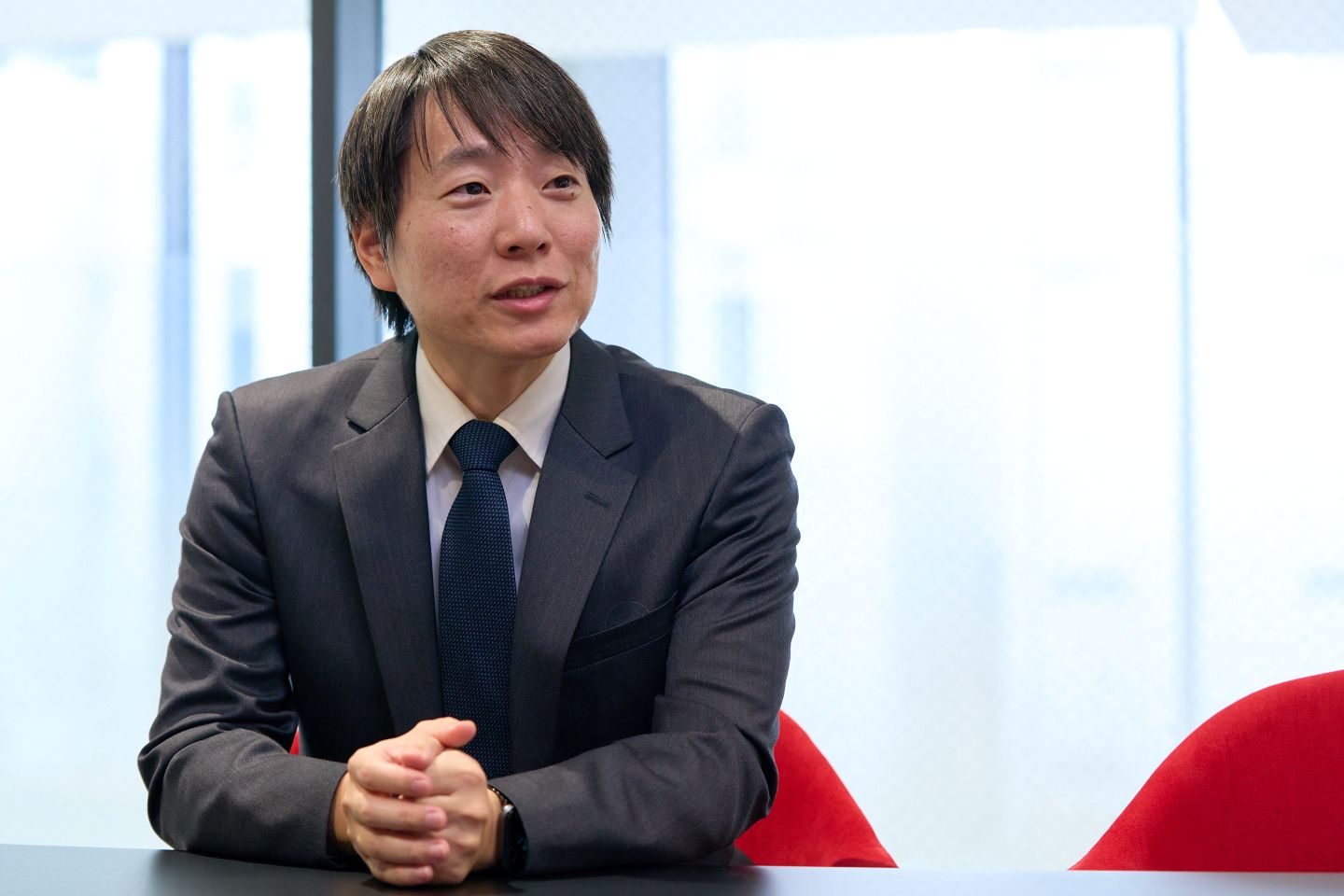
Shunichi Tetsuya, TOPPAN Inc.
Yanagihara:
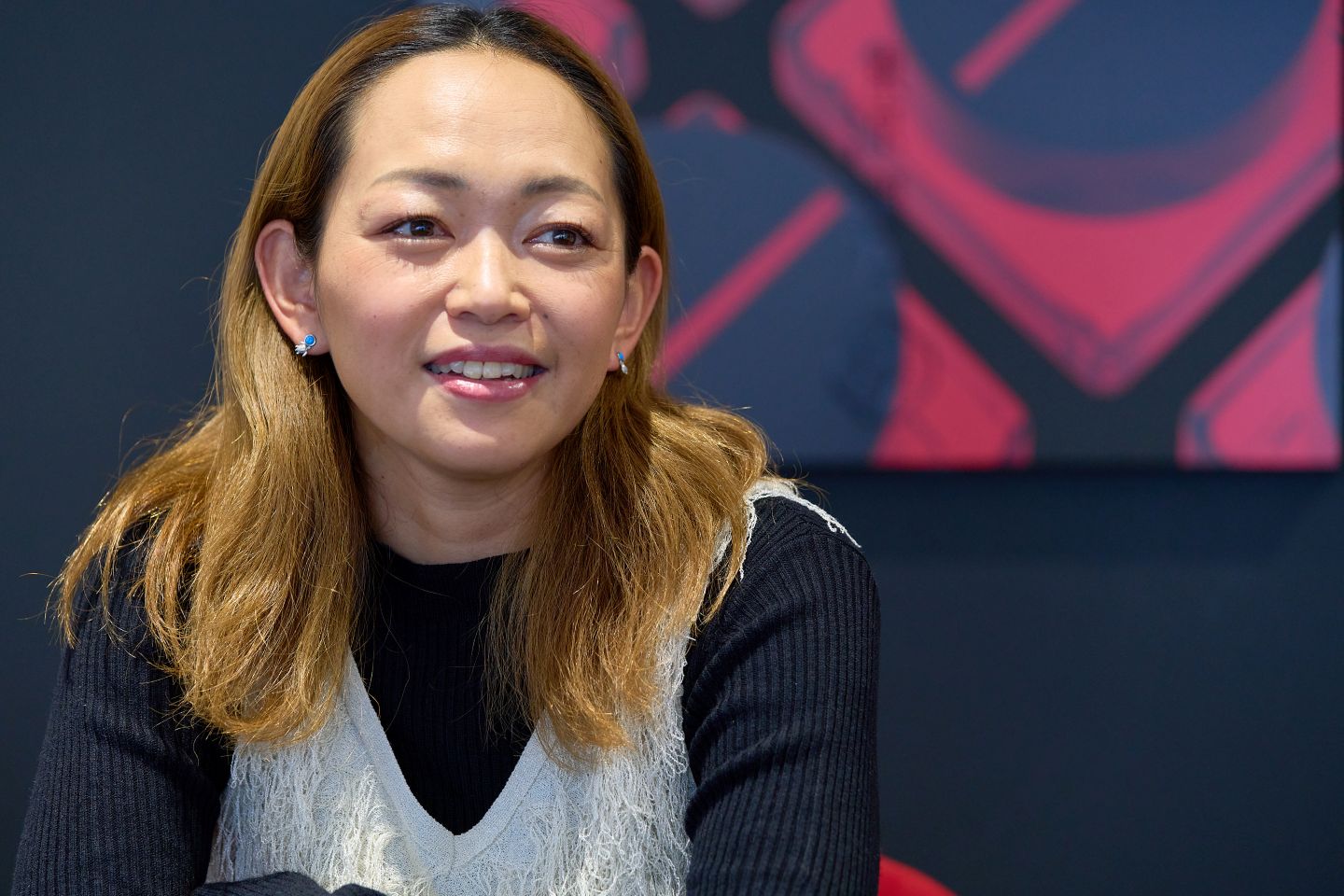
I am primarily responsible for initiatives and communications related to fibona products. For this event, I was mainly involved in planning the in-store experience at fibona Lab. Since each fibona product has a strong and distinct character, we start from scratch when designing the retail space, striving to create an environment where customers can directly experience and feel the product’s unique worldview.
Aizu:
I am mainly responsible for updating the website, managing social media posts, and running the community. For this event, in addition to sharing information on social media, I supported the creation of customer-friendly flow lines for a smooth experience, as well as the production of in-store materials such as display panels.
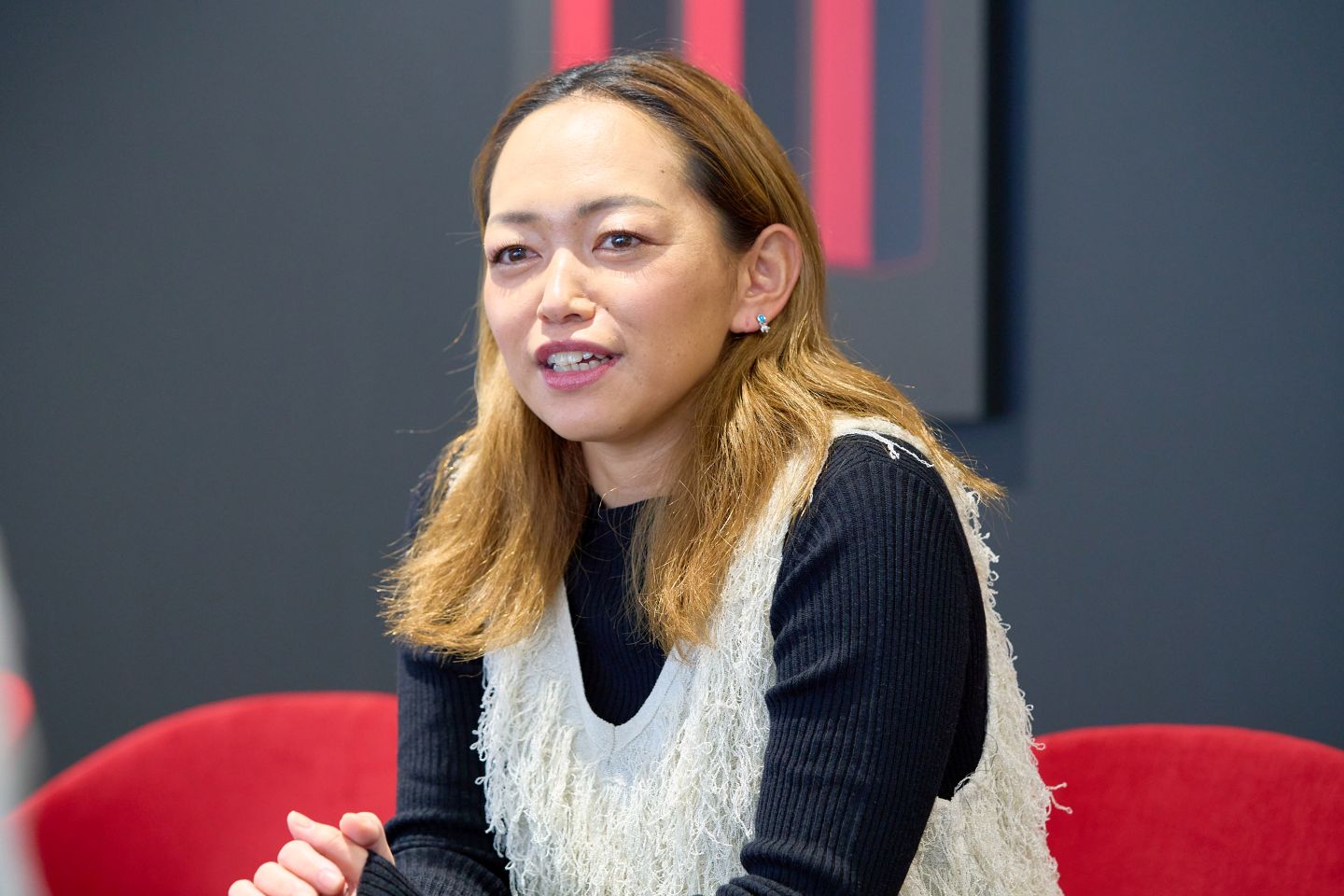
Yoko Aizu,fibona Team Member
Yanagihara:
The starting point for this co-creation was TOPPAN introducing us to their technology. While fibona is always exploring new technologies beyond in-store implementations, we found that one of the proposed technologies aligned particularly well with our Skin Accessory™ concept. This led us to collaborate on creating an in-store experience incorporating an AR event.
──This was a virtual makeup experience event making full use of AR technology—what kind of experience did you design?
Tetsuya:
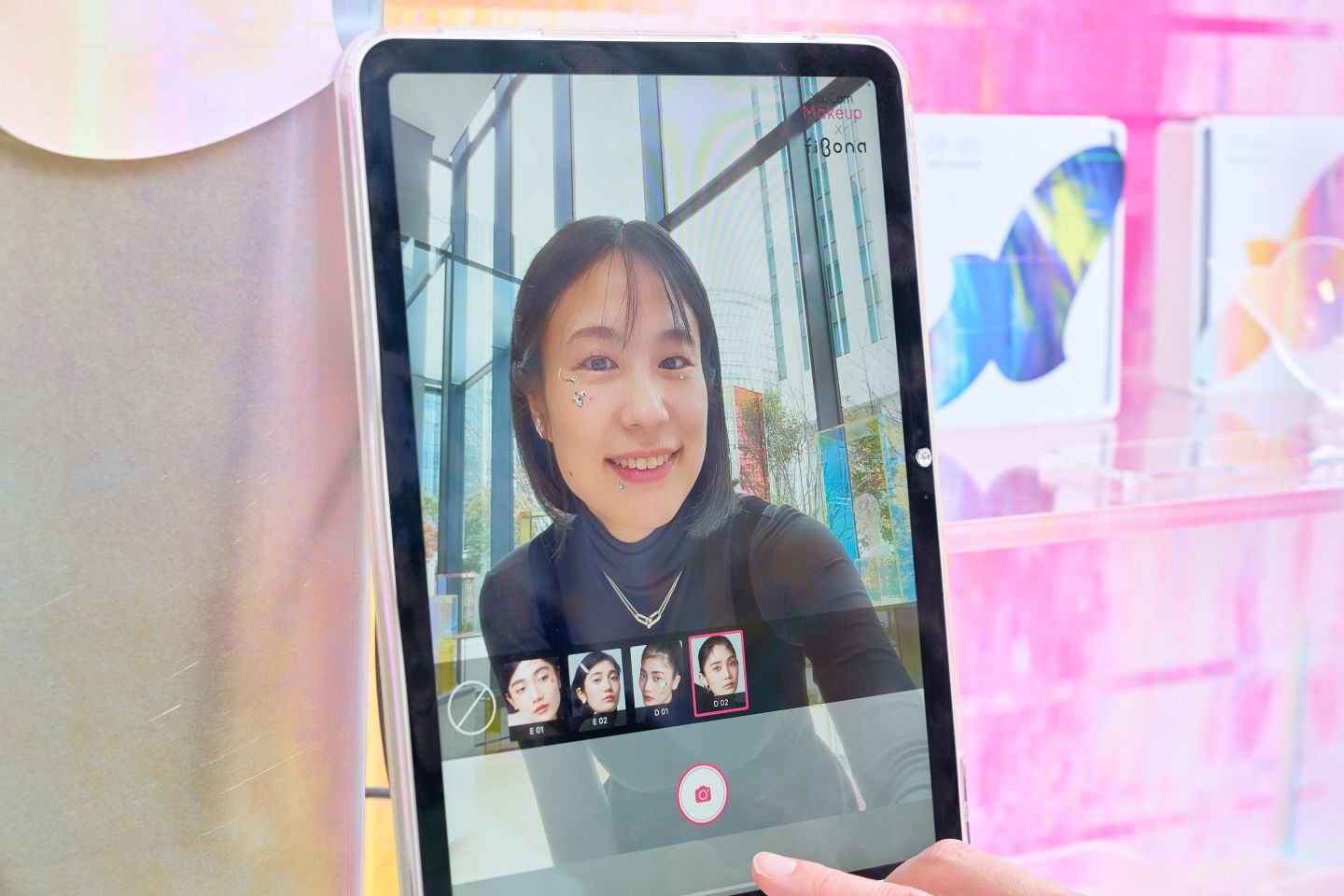
When customers see their face reflected on a tablet installed at fibona Lab, AI analyzes their facial structure and expressions in real time, allowing them to instantly view newly designed 3D Skin Accessory™ pieces fitted to their skin as if they were part of it. The experience lets customers feel as though they are actually wearing the Skin Accessory™.
For this project, we utilized solutions from Perfect Corp., a global leader in virtual makeup technology. In addition, each Skin Accessory™ component was photographed individually in high resolution, and its fine textures were reproduced with a level of accuracy virtually indistinguishable from the actual product.
Yanagihara:
The new designs come in two styles: a “cute” style featuring motifs such as butterflies and bubbles, and a “cool” style centered around metal parts. For the virtual makeup experience, we created two variations for each style based on the volume applied to the face, resulting in a total of four 3D models. Participants could download images of their virtual makeup to their smartphones, and those who shared their images or moments from the event on social media received a small gift.
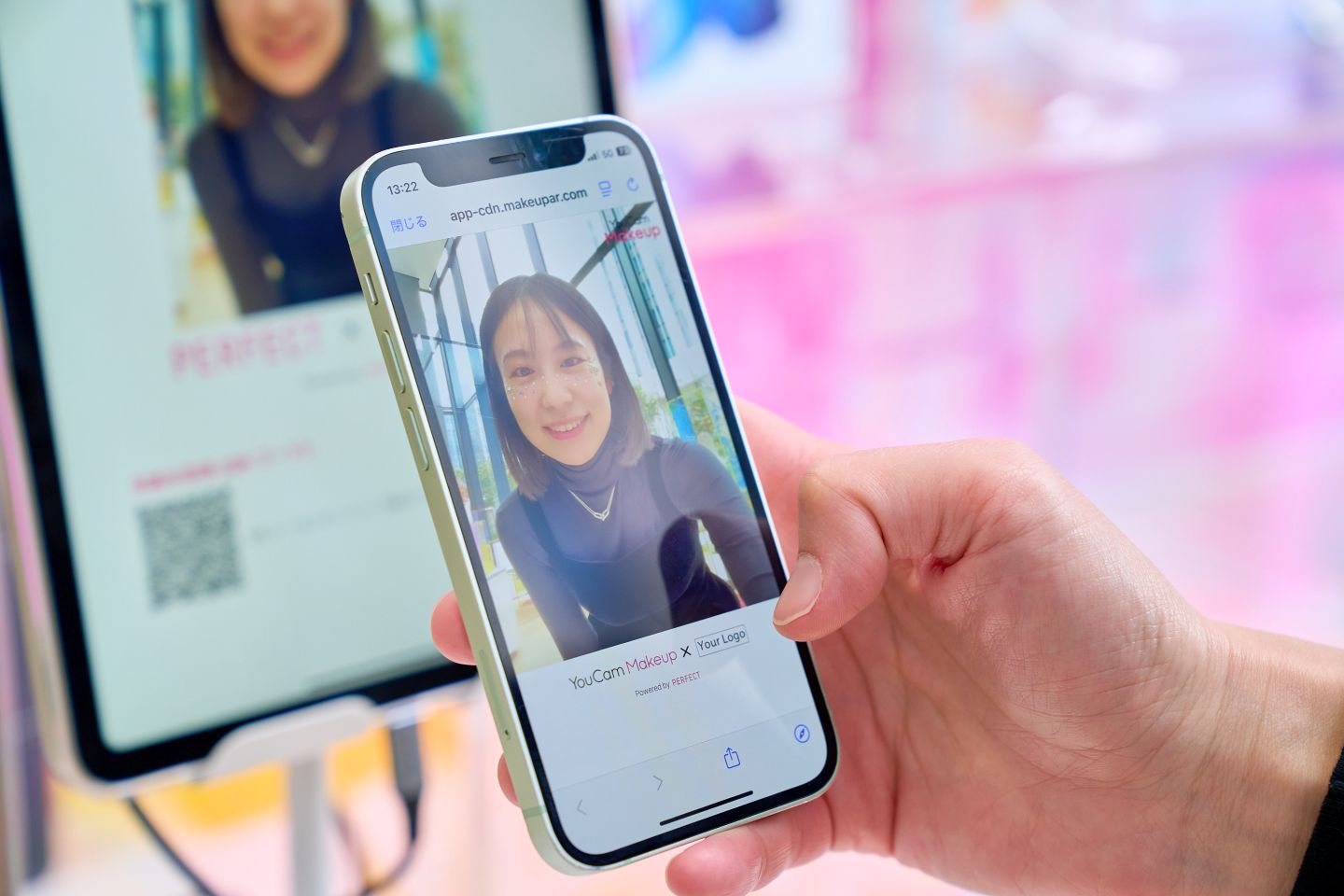
The Virtual Makeup Experience Is a Device That Switches On Excitement
──When creating the booth for the AR experience, were there any particular points you focused on?
Yanagihara:
fibona believes in the idea of “co-creation products”—products that are not finished once they are released into the world, but are refined together with customers through their feedback. For this reason, at the store we wanted to design an experience that goes beyond simply purchasing a product, allowing customers to understand the co-creation process and feel motivated to share their own feedback.
That said, the act of “giving feedback” requires a certain amount of energy from customers as well, and it’s difficult to create that connection unless they genuinely empathize or feel a deep interest. That’s why our top priority was to offer an experience that excites them on an intuitive level—one that makes them think, “Wow!” or “This is interesting!” without overthinking it. The AR virtual makeup experience serves as a device that switches on that sense of excitement.
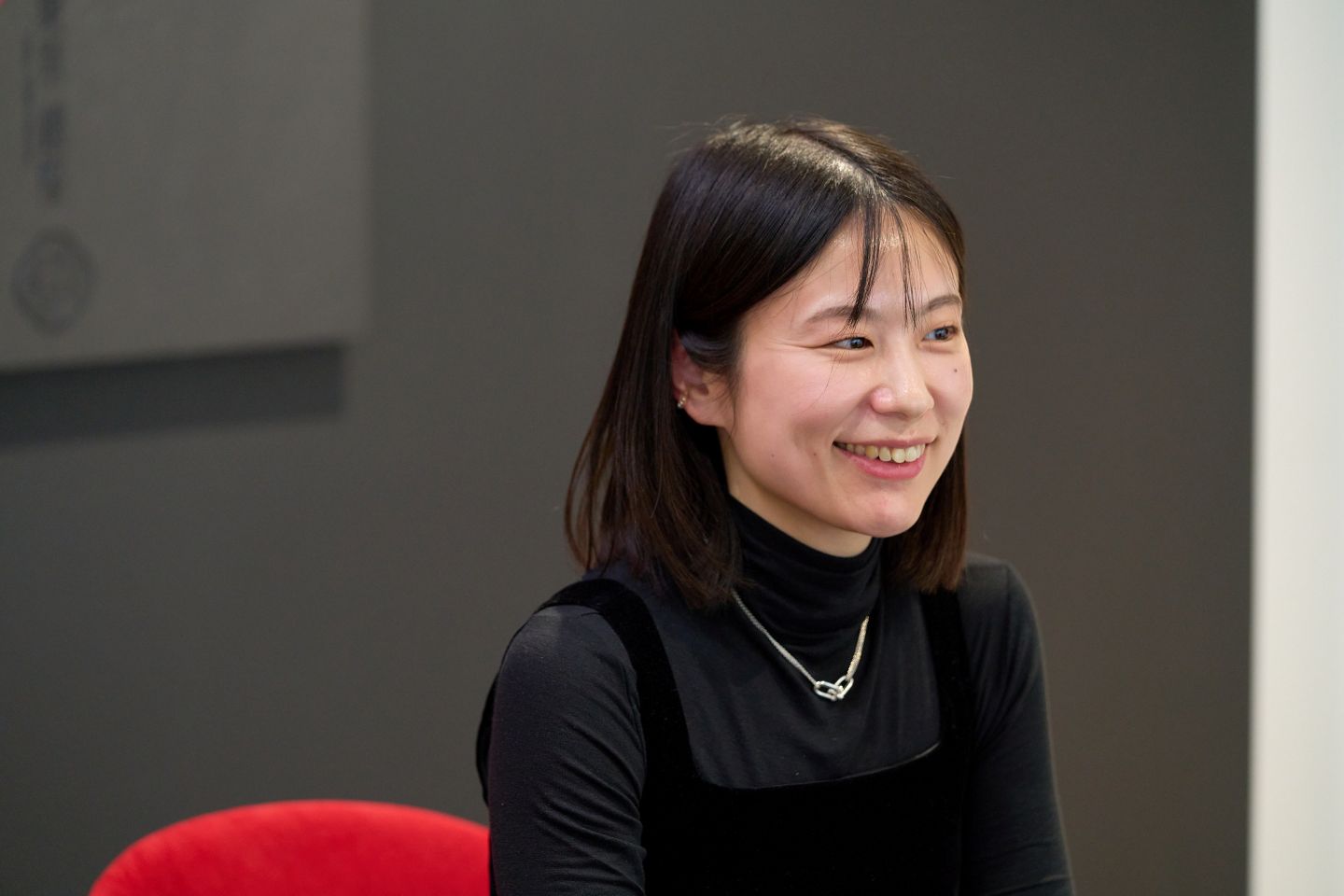
Akane Yanagihara, fibona team member
Aizu:
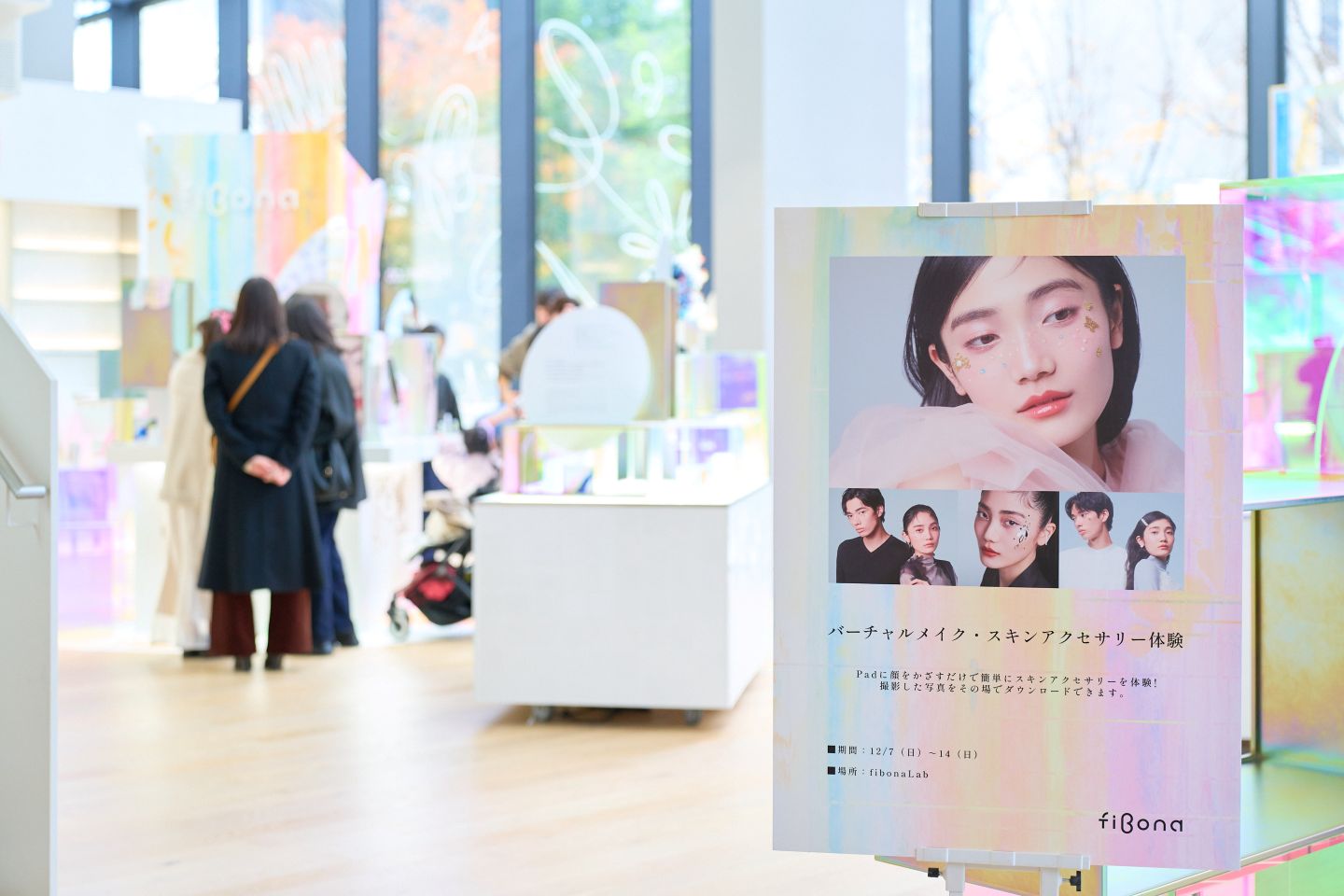
To reach a wider audience, we also put considerable thought into the visual approach at the store. Even visitors who came to Shiseido Beauty Park without prior knowledge of the event could understand at a glance what was happening, thanks to large display panels and signage designed to smoothly guide them into the experience. Lowering the psychological barrier and creating a natural flow that invites people to participate was one of the key points of this project.
Yanagihara:
We also selected the timing of the event strategically. The Yokohama Minato Mirai area, where Shiseido Beauty Park is located, hosts many events throughout the year, so we researched nearby happenings and chose a period when we expected a large number of people likely to be interested in Skin Accessory™ to gather.
Aizu:
This area is also home to large-scale music venues such as PIA Arena MM and K-Arena Yokohama. With this in mind, we incorporated measures such as adding venue and facility hashtags to our Instagram posts, ensuring that our content would also catch the attention of people attending live concerts.
The Potential of a Space for Experiencing
──After actually holding the AR experience event, what kind of reactions did you receive?
Tetsuya:
What surprised us was how often passersby stopped in their tracks the moment they saw themselves reflected on the tablet screen. There were aspects we couldn’t fully predict until we actually ran the event, such as how much interest it would generate, so it was encouraging to see that simply passing by the booth was enough for people to notice it.
Yanagihara:
Skin Accessory™ is a product that allows people to enjoy makeup as a form of fashion—an “accessory for the skin.” However, because it is still a new and unfamiliar type of makeup for many customers, we faced the challenge of a high barrier before they felt comfortable actually applying it to their skin. In the past, we prepared interactive elements such as acrylic plates with Skin Accessory™ applied, which customers could hold up to their faces to try it out.
By contrast, AR-powered virtual makeup can be experienced as a natural extension of an everyday action—looking into a mirror. As a result, there were almost no people who simply passed by without engaging. It was particularly striking to see people across a wide range of age groups enjoying the experience.
Aizu:
Many customers couldn’t help but get excited on the spot, saying, “It looks so good!” and “So cute!”
We also received positive feedback such as, “It really feels like I’m wearing it, so it’s easy to imagine,” and “It’s fun to try so many different options.”
Because the virtual makeup is instantly displayed on the tablet, perfectly matched to each customer’s face, that sense of realism reportedly led to increased product purchases.
Yanagihara:
We were able to gain valuable insights into what kinds of experiences attract customers and what actions they take, through our co-creation event with TOPPAN.
We feel this was a significant achievement for fibona, as well as for our in-store staff.
A “Co-Creation Partner” Relationship That Elevates Each Other
—— As co-creation partners, what impressions did fibona and TOPPAN have of each other?
Tetsuya:
When we introduce new technology, the team at fibona doesn’t just “evaluate” it. Instead, they expand on it by asking, “How can we play with this?” and “How could we use it to make things even more interesting?”
They approach it with the same excitement as discovering a new toy, thinking enthusiastically about how to multiply its potential by combining it with their current activities. That positive and forward-looking atmosphere felt incredibly refreshing to us as well.
We were also surprised that an event, which would normally take six months to a year to plan, was brought to life in just two to three months. Being able to take on a challenge quickly and flexibly through a one-week test rollout created a valuable environment for us as a technology provider.
Yanagihara:
For us, external co-creation partners are like “saviors.” When trying to create new experiences that don’t yet exist in the world, combining our ideas with technologies we don’t have in-house is essential.
The stance taken by partners like TOPPAN—saying, “Let’s start on a small scale and try it as a challenge”—is something we truly appreciate and find very reassuring.
Aizu:
fibona’s projects are always run on a tight schedule due to our agile approach (laughs), but through this event, we were reminded once again that being able to create together with partners like TOPPAN—who understand and share this sense of speed—is a crucial factor in a project’s success.
—— As fibona has championed open innovation from the very beginning, how do you view co-creation with external partners?
Yanagihara:
At fibona, we place great importance on “co-creation” with our customers as we build our products together. Co-creating with other companies that bring technologies and expertise we don’t have in-house is an extension of that mindset, and it’s something we want to continue pursuing proactively.
We believe there are many people in new business teams and startups who want to “test their technology in a real market.” By joining forces with such passionate partners, we hope to build strong, mutually elevating relationships and create many experiences that truly move our customers.
—— Finally, could you share your aspirations for fibona Lab moving forward and your expectations for future co-creation?
Aizu:
We want to continue cherishing the “experiences that can only be had at fibona Lab.” Rather than simply selling products, we aim to keep creating a place where we listen closely to our customers’ candid feedback—what they want and hope for—and use those insights to inform product development and future re-releases.
Tetsuya:
Once again, we felt that fibona Lab is more than just a place to purchase products; it is a space for drawing out customer needs through communication. This time, we also measured data such as how many people participated in the experience and which designs were chosen. Moving forward, we believe we can continue working with fibona to help visualize these unspoken customer needs and insights.
Yanagihara:
We would definitely love to learn more about that. We hope to continue taking on new challenges together with TOPPAN’s support in many different ways. By creating a vibrant in-store environment where customers discover something new every time they visit, we aim to further energize and grow fibona.
(text: Ikumi Tsubone photo: Yuko Kawashima edit: Kaori Sasagawa)